The Reed Remembers
By Phill Dunn: Senior Manager - Sustainability, Education & Culture, Expo City Dubai
The Reed Remembers: Water, Wisdom and a Cultural Revival
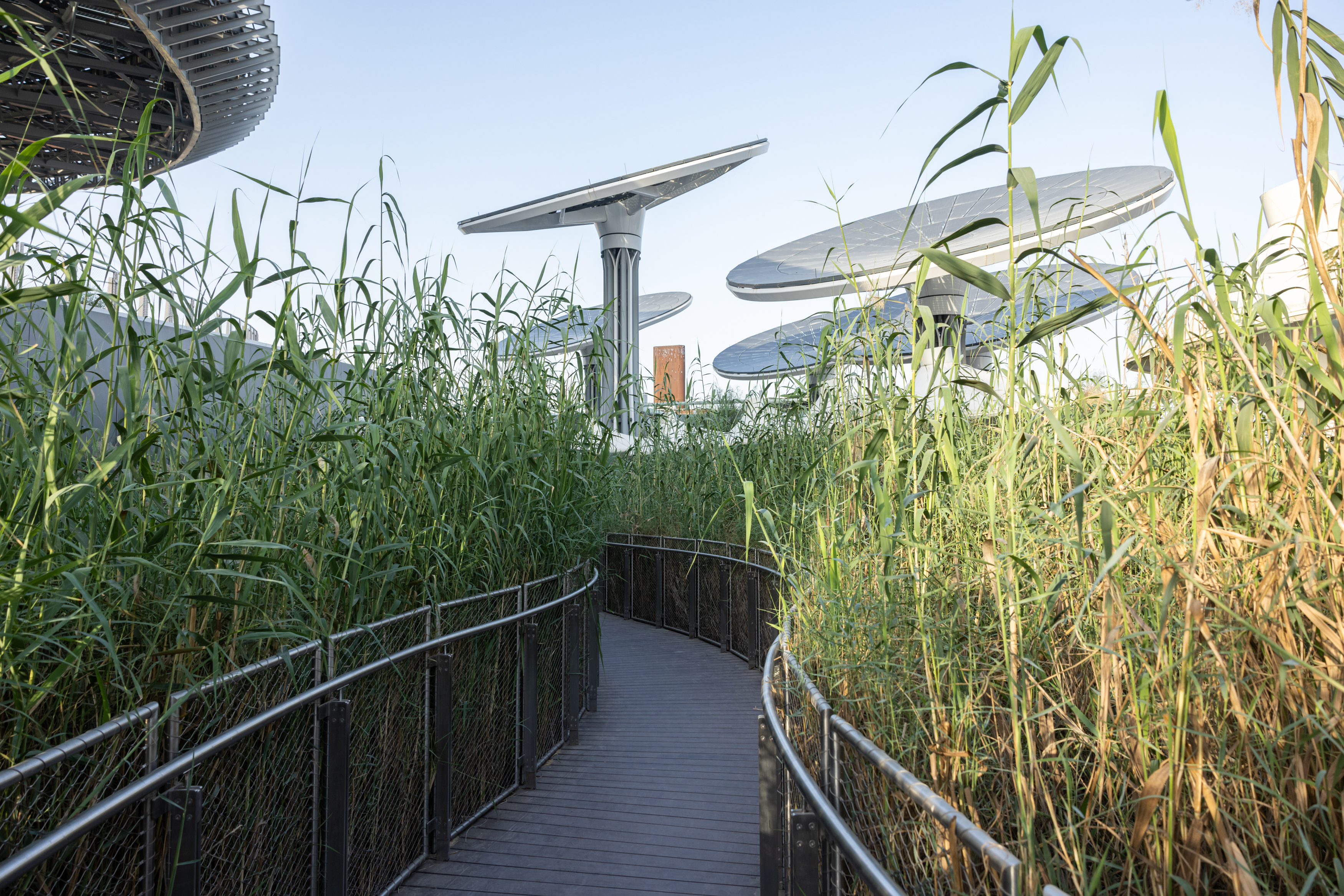
As you first step on to the wooden boardwalk, the towering reeds quietly engulf your senses, their slender stalks stroke the sky like a paint brush to canvas. A serenity washes over you. Their gentle swaying on the breeze produces a rustle that whispers tales of generations past, while a purple sunbird adds its chorus.
As sunlight filters through the stalks, Phil Dunn gazes out with a look of pensive reverence.
Behind his piercing blue eyes is an unwavering sense of calm, thoughtful determination. A man with a purpose. A man whose background in landscape architecture and deep, almost spiritual, appreciation for nature make him the perfect guardian for biodiversity at Terra, Expo City Dubai. That quiet adoration of nature began long ago, in the wetlands of his childhood.
When we think of wetlands, we rarely think of cities; let alone the ultra-modern metropolises of the UAE. But long before glass and concrete reshaped our cities, reeds built our homes, shaded our courtyards, and carried the stories of our people.
To the untrained eye, Terra’s engineered reedbeds may seem like a patch of hardy plants beside a boardwalk. Look closer. Listen longer. These reeds aren't just treating wastewater; they are helping to revive a relationship with the land that once defined Emirati culture—and may yet shape its future.
Historically, reeds were woven into the very fabric of life across the Arabian Peninsula. From mats and baskets to walls of traditional barasti homes, they were shelter, tool, and texture.
Here, in the heart of Expo City Dubai, a quiet ecological revolution is underway. It begins with a single reed.
Their presence today; cleaning water, cooling cities, and stitching green into urban systems—is part of a larger cultural renaissance. As we bring these materials back into our landscapes, we also bring back the wisdom that once guided them.
“I know this better than most. I was raised in the wetlands of Canada.” Explains Phil. “My childhood was spent catching frogs and turtles, wandering swamps, and learning from the environment’s slow, quiet logic. That instinct has never left me. Nature has had 3.8 billion years of research and development; our job is to pay attention.”
Rather than build a conventional treatment system for their blackwater, Terra turned to the ecological blueprint. Every day, over 20,000 litres of wastewater from toilets and floor drains pass through a dense tangle of Phragmites australis. Below the surface, bacteria and fungi break down pollutants. The plants absorb and sequester the rest. In just 24 hours, what entered as waste emerges as clean water—fit to irrigate a landscape that uses 75% less water than traditional greenery.
Phil understands and appreciates this natural solution to a modern problem, and the cultural relationship between the reeds and the land: “When I moved the UAE more than 20 years ago, I was always fascinated by the connection of the people to the land and wanted to pass these lessons on to my young children. Perhaps these reeds are more than water filters; they’re reminders that the solutions to our future often grow from the roots of our past.”
But the water story is only one thread.
Each winter, sap-sucking aphids descend on the reeds in overwhelming numbers, feasting until their green stalks bow under the weight. In a conventional cityscape, this might spark panic—or pesticides. But Terra’s landscapes are pesticide-free by design. And so, again they patiently wait for mother nature to offer her antidote.
Soon, zigzag ladybirds arrive, restoring the balance through a quiet act of ecological trust. The cycle, once understood, repeats each year like a seasonal ritual. This is not landscaping; it’s stewardship.
These reedbeds have become more than functional. They are habitat, climate regulator, and educator. They cool the microclimate by up to 5°C. They attract birds, dragonflies, and stories.
Above them, solar energy trees cast dappled light. The shade protects the reeds from Dubai's heat, while the reeds cool the panels, boosting energy efficiency. It’s a feedback loop of design and ecology; powered by sun and rooted in water.
And they are beautiful. Walk the bamboo boardwalk and you see more than greenery; you glimpse a philosophy: slow down, listen, let the earth teach.
Yet this is not mere nostalgia. It’s a reawakening; a cultural renaissance.
In the UAE’s rush toward modernity, native landscapes were long overlooked. Imported turf, tropical trees, and thirsty ornamentals took centre stage. The desert was seen as something to overcome, not understand. But Expo 2020 changed that. It invited the world to see the UAE’s true roots; and Terra carried the torch forward.
The humble reeds from the forefathers of the nation, now remind us of what could be. They are design, memory, and future.
So perhaps the reedbed isn’t just a wastewater solution. It’s a mirror. It shows us how culture, nature, and technology can converge; not in competition, but in chorus.
Sometimes you just have to wait. Earth holds the answers, if we only remember to listen, as our ancestors once did.




 Google Play
 App Store